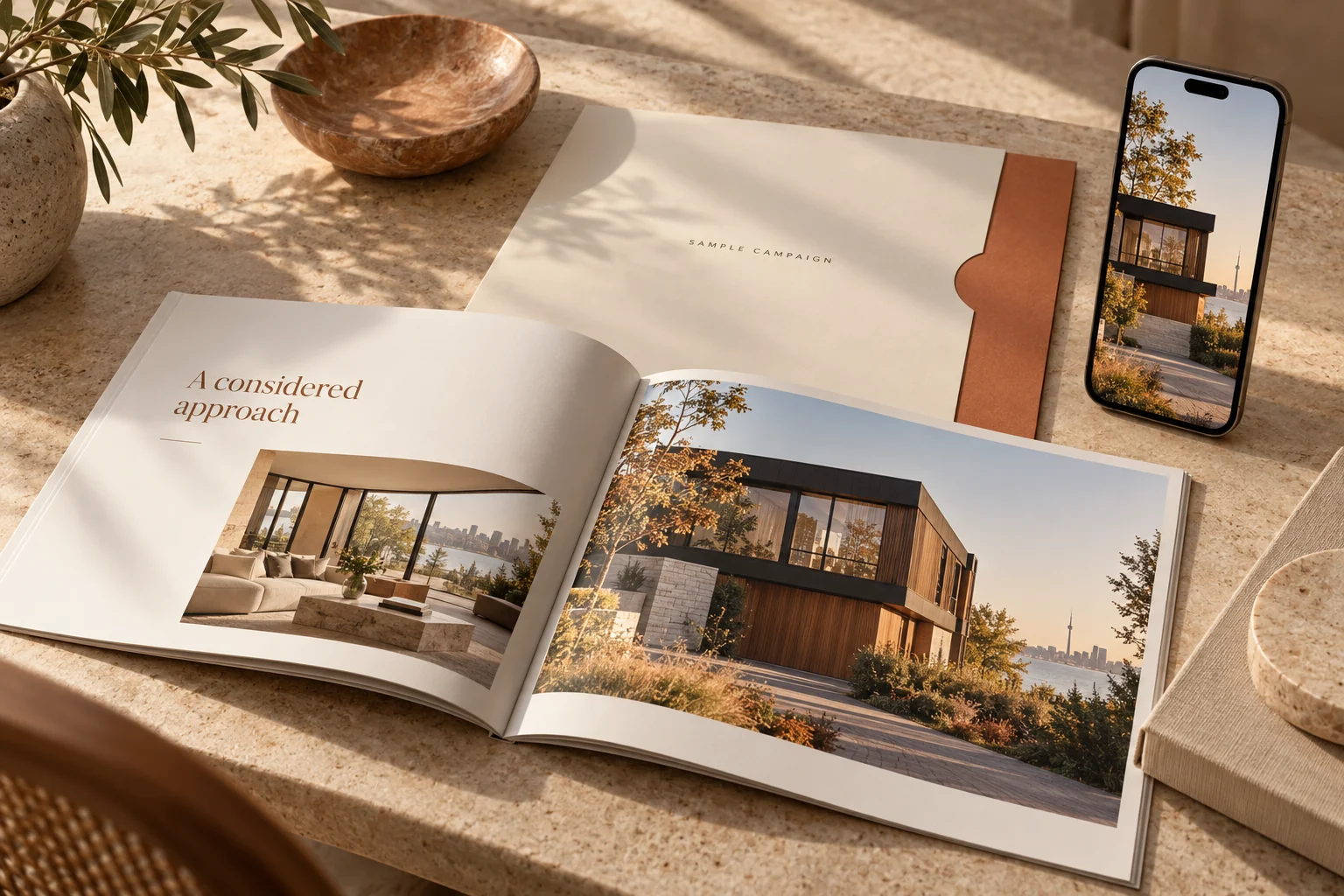
Agree on the story before moving furniture
Walk through the home with your broker and identify the features that deserve attention. It may be the connection between kitchen and garden, a practical home office, a generous entrance, or a well-organized condo layout. Choose a few clear priorities rather than trying to make every room communicate everything.
Ask which rooms and exterior areas will be photographed, whether floor plans or video are planned, and how much preparation time is available. A simple written brief helps the photographer understand the property and gives you a realistic list of tasks for the days before the appointment.
Prioritize clarity over a complete makeover
Start with the changes that make each space easier to read: clear circulation routes, organize visible surfaces, and remove items that distract from a room's purpose. The National Association of REALTORS' photo-preparation guidance notes that clutter and furniture arrangement can appear differently through a camera, and recommends taking practice photographs before the shoot.
Use those test images to decide what actually needs attention. A room may only need a chair repositioned or a shelf simplified. Discuss proposed purchases and repairs with your broker before committing time and money. Preparation should be proportionate to the property, the target presentation, and the schedule.
Build a room-by-room plan
For the kitchen, decide which everyday items can be stored temporarily and where they will go. In bedrooms, plan bedding and bedside surfaces together. For a working office, arrange a way to put documents and equipment away without disrupting the next workday. Give each task a person and a completion date.
Prepare the route between rooms as well. Buyers should be able to understand how spaces connect, so keep doorways and transitions unobstructed. If something is being stored temporarily for the photographs, choose a location outside the planned shoot instead of moving the same pile from room to room during the appointment.
Check privacy and accuracy
Before photography, look for family photographs, personal mail, calendars, certificates, computer screens, security details, and children's names. Decide what should be removed or concealed. Include mirrors and reflective surfaces in the check because they can reveal areas outside the main composition.
Discuss editing and any virtual staging in advance. A visual concept should be clearly identified and should not leave a buyer confused about what physically exists. Keep the actual layout and features understandable. If a photograph needs clarification, resolve it before the listing launches instead of relying on a showing to explain the difference.
Make photo day straightforward
Confirm access, parking, the expected appointment length, and arrangements for pets or household members. Ask the photographer about lighting preferences and the best sequence for the rooms. Have a small final-check list ready so the appointment begins with preparation complete.
Exterior presentation also needs a plan: the entrance, driveway, balcony, terrace, or garden may play an important part in the property's story. Coordinate any building access or shared-space permissions with the appropriate person. If weather prevents a useful exterior session, agree on the next step rather than improvising an inaccurate substitute.
Review the finished set as a buyer would
Look at the photographs in order. Do they explain the home, or repeat several versions of the same view? Check that the strongest features are visible, the room descriptions match, and the selection does not create a misleading impression of layout or condition.
Use the same approved images consistently across the listing, brochure, social content, and other campaign materials. The preparation is doing its job when the presentation feels coherent and the in-person visit delivers what the images led a buyer to expect. A selling consultation can help establish that plan before you begin.
Sources & further reading
Primary resources referenced in this note. Check the source directly for current guidance.
General educational information, not advice about a specific transaction or brokerage. Examples are illustrative.
Make your next step clearer.
Talk through your priorities and questions before making your next move.
Start a conversation ↗